Getting Started
What comes in the La Brea Bakery Sourdough Bread Baking Essentials Kit?
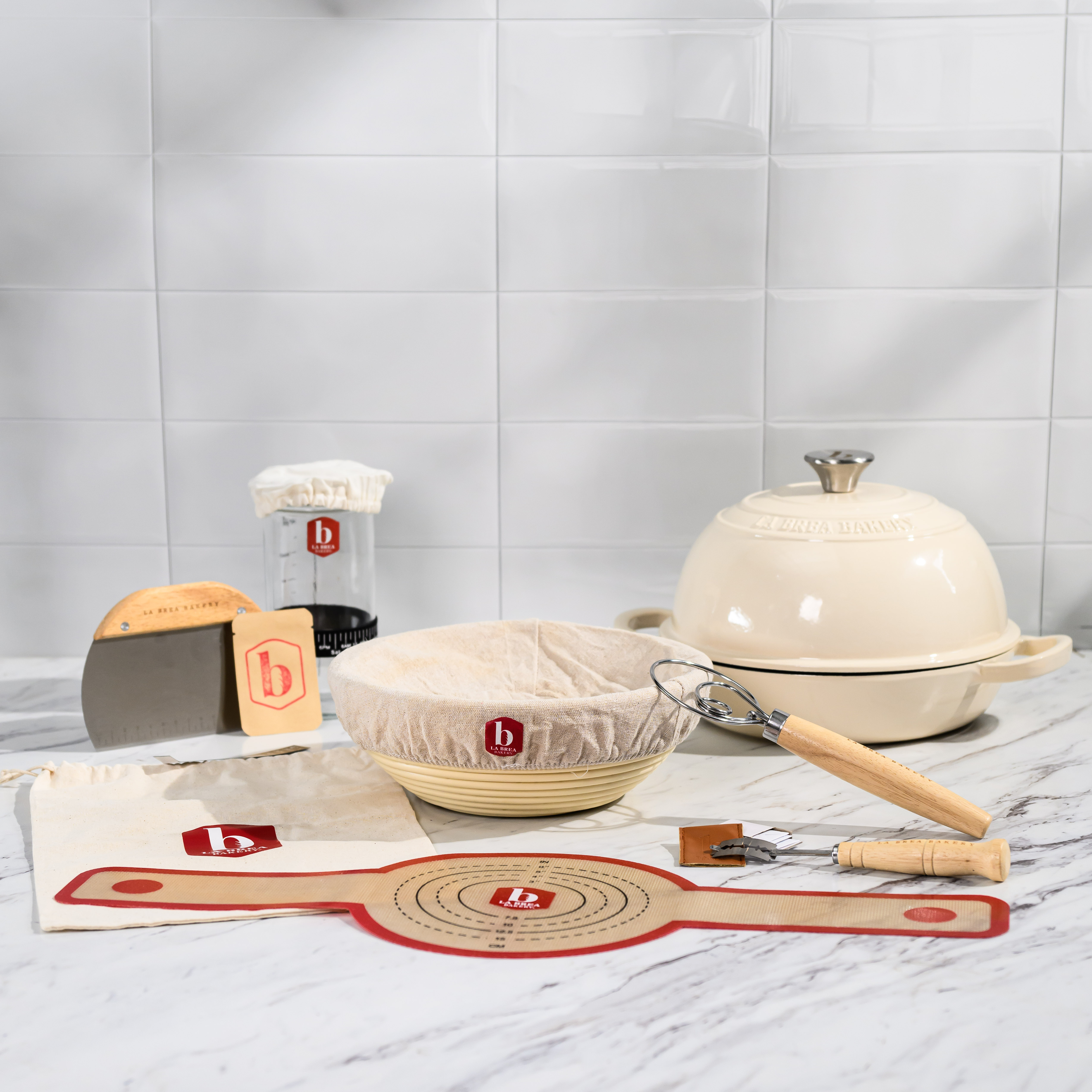
The kit includes everything you need to begin your sourdough journey. The kit includes a glass starter jar, dough whisk, silicone bread sling, bread lame, proofing basket and dough scraper, giving you a complete setup for mixing, proofing, shaping, scoring and baking at home.
What is a sourdough starter?
A sourdough starter is a living mixture of flour and water that contains naturally occurring yeast and beneficial bacteria. With regular feedings, it becomes active and can be used to help sourdough bread rise while developing its signature flavor.
How do I activate my sourdough starter?
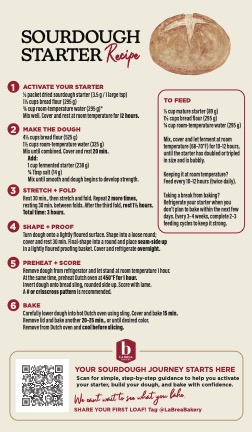
Follow the step-by-step instructions included with your kit to combine and feed your starter with flour and water. Keep it at room temperature and continue feeding as directed until it becomes bubbly, active, and begins reliably rising after feedings.
How long does it take for my starter to become active?
Every starter is a little different, but you should begin to see signs of activity within a few days. Temperature, feeding schedule, flour, and water can all affect how quickly your starter becomes fully active.
How do I know when my starter is ready to bake with?
Your starter is generally ready when it consistently becomes bubbly and rises significantly after feeding, often doubling in size within several hours. A predictable rise-and-fall pattern is a good sign that your starter is strong enough for baking.
What type of flour and water should I use?
For best results, use the type of flour recommended in your kit instructions and room-temperature filtered or bottled water.
Where should I keep my starter while it’s activating?
Keep your starter at room temperature in a comfortable, draft-free spot away from direct sunlight or extreme heat. A moderately warm environment will generally encourage fermentation and help your starter become active.
Feeding & Maintaining
How often should I feed my sourdough starter?
While establishing your starter at room temperature, follow the feeding schedule provided with your kit. Once your starter is established, your feeding schedule can depend on how often you bake and whether you keep your starter at room temperature or in the refrigerator.
Can I store my starter in the refrigerator?
Yes. Once your starter is established and active, refrigeration is a great option if you don't plan to bake every day. The cooler temperature slows fermentation, meaning your starter won't need to be fed as frequently.
How do I maintain my starter if I'm not baking regularly?
Store your established starter in the refrigerator and feed it periodically to keep it healthy. When you're ready to bake again, bring it back to room temperature and resume regular feedings until its active and rising predictably.
What should I do with sourdough discard?
Don't toss it! Sourdough discard can be used in recipes like pancakes, waffles, crackers, pizza dough, muffins, and more. It's a great way to reduce waste while adding sourdough flavor to other recipes.
Troubleshooting
Why isn’t my starter rising or bubbling?
Don't worry—starters can take time to get going. A cool room, inconsistent feedings, water quality, or simply needing more time can slow activity. Continue feeding according to the instructions and keep your starter in a comfortably warm environment.
Why is there liquid on top of my starter?
A layer of liquid can be a sign that your starter is hungry and ready for a feeding. If there are no signs of spoilage, feed your starter according to the instructions and monitor its activity.
What should a healthy starter look and smell like?
A healthy starter should show bubbles and rise after feeding. Its aroma may range from mildly yeasty to pleasantly sour or tangy. Its appearance and aroma can change throughout the fermentation cycle.
How do I know if my starter has gone bad or developed mold?
Visible fuzzy mold or unusual pink, orange, or other unexpected discoloration can indicate contamination. If you see signs of mold or spoilage, it's safest to discard the starter rather than try to revive it.
Can I revive a starter that hasn’t been fed in a while?
Often, yes! If there are no signs of mold or spoilage, an established starter can often be brought back with regular feedings at room temperature. It may take several feeding cycles before it returns to its normal rising and bubbling pattern.
Baking
When is my starter ready to use for my first loaf?
Your starter is ready when it is consistently active, bubbly, and reliably rises after feeding. Rather than relying on a specific number of days, look for consistent activity as your best indicator that it's ready to bake with.
Should I feed my starter before baking, and when should I use it?
Yes. For most sourdough recipes, you'll want to use an active starter that has recently been fed. A good time to bake is when your starter has risen significantly and is at or near its peak activity.
Why didn’t my sourdough bread rise?
There are several possible reasons, including a starter that wasn't active enough, fermentation time, dough temperature, or environmental conditions. Make sure your starter is reliably rising after feedings before using it to make bread. *follow directions mwe provided below or above TBD